

How B2C Marketing Attribution Works (And How to Use It to Grow Your Business)
You're spending money on Facebook ads, Google search, email campaigns, and maybe a dozen other marketing channels. Which ones are actually working?
That's not a rhetorical question. Research from Google and Boston Consulting Group found that poor attribution wastes roughly $71 billion in advertising spend every year. At the same time, 67% of B2C marketers say attribution is their biggest measurement challenge.
But here's the flip side: companies that get attribution right see 15-30% better ROI. If you're spending $500,000 a year on marketing, we're talking about $75,000-$150,000 in additional returns.
This guide breaks down what you need to know about B2C marketing attribution and how to use it to make smarter budget decisions.
What Marketing Attribution Actually Means
Marketing attribution identifies which touchpoints contribute to conversions. It connects the dots between your marketing activities and actual sales.
Here's what a typical B2C customer journey looks like:
Monday: Emma sees your Instagram ad for yoga mats while scrolling during lunch. She thinks they look nice but keeps scrolling.
Wednesday: She searches "best yoga mats for beginners" on Google. Your blog post shows up, and she spends five minutes reading your buying guide.
Friday: She sees your retargeting ad on Facebook and clicks through to check out your products. Still doesn't buy.
Sunday: Your email newsletter arrives with a 15% discount code. She clicks and completes her purchase.
So which touchpoint deserves credit for this sale? Most businesses would point to email since it was Emma's last click. But she never would have heard of your brand without that first Instagram ad. Every touchpoint mattered. That's the core insight attribution is built on.
The Six Attribution Models
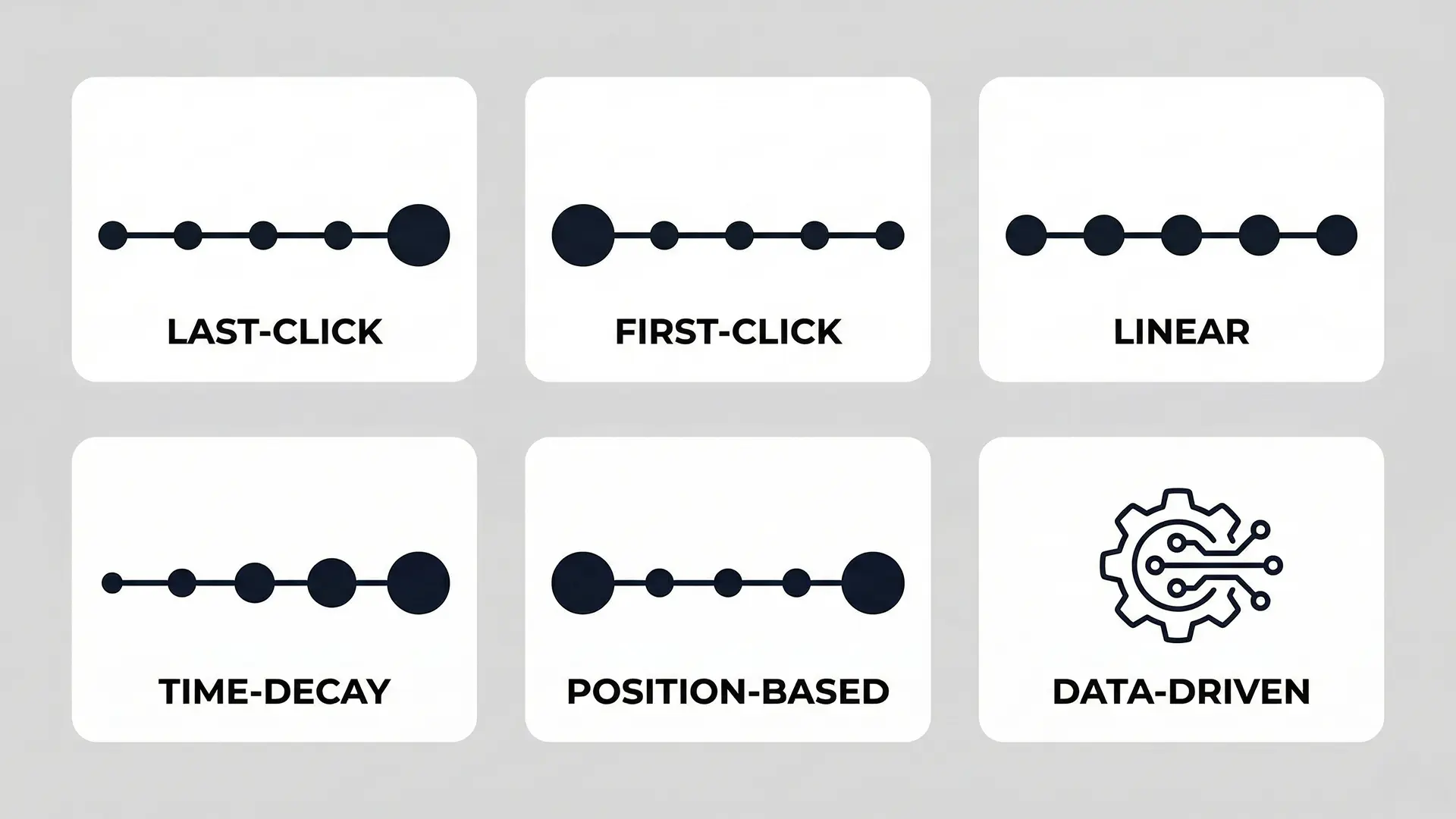
Attribution models assign credit to different touchpoints. Your choice shapes how you understand what's working.
1. Last-Click Attribution The final touchpoint gets 100% credit. Best for same-day purchases and beginners. Limitation: ignores everything that happened before the final click.
2. First-Click Attribution The first touchpoint gets 100% credit. Best for brand awareness campaigns. Limitation: ignores what actually convinced someone to buy.
3. Linear Attribution Credit gets split equally across all touchpoints. Best for multi-channel marketers who want a balanced view. Simple, fair, good place to start.
4. Time-Decay Attribution Recent touchpoints get more credit through exponential decay. Best for longer consideration periods (7-30 days) and bigger purchases.
5. Position-Based (U-Shaped) Attribution First touch gets 40%, last touch gets 40%, middle touchpoints split 20%. Best for businesses that value both awareness and conversion.
6. Data-Driven Attribution Machine learning analyzes thousands of journeys to figure out what actually influences conversions. Best for high-volume businesses (400+ conversions per month).
How to choose: Start with linear or position-based. They're accessible, give balanced insights, and work with free tools like Google Analytics 4. Move to data-driven models once your volume increases.
Why Last-Click Gets It Wrong
When you analyze thousands of B2C customer journeys, you see how last-click systematically distorts the picture:
| Channel | Last-Click Credit | Multi-Touch Credit | Difference |
|---|---|---|---|
| Brand Search | 38% | 22% | Overvalued 73% |
| 24% | 18% | Overvalued 33% | |
| Paid Social | 6% | 16% | Undervalued 63% |
| Display Ads | 4% | 9% | Undervalued 56% |
Last-click overvalues bottom-funnel channels while dramatically undervaluing awareness channels. This leads to bad budget decisions—cutting channels that work while overfunding channels that just capture existing demand.
Getting Started: Implementation Steps
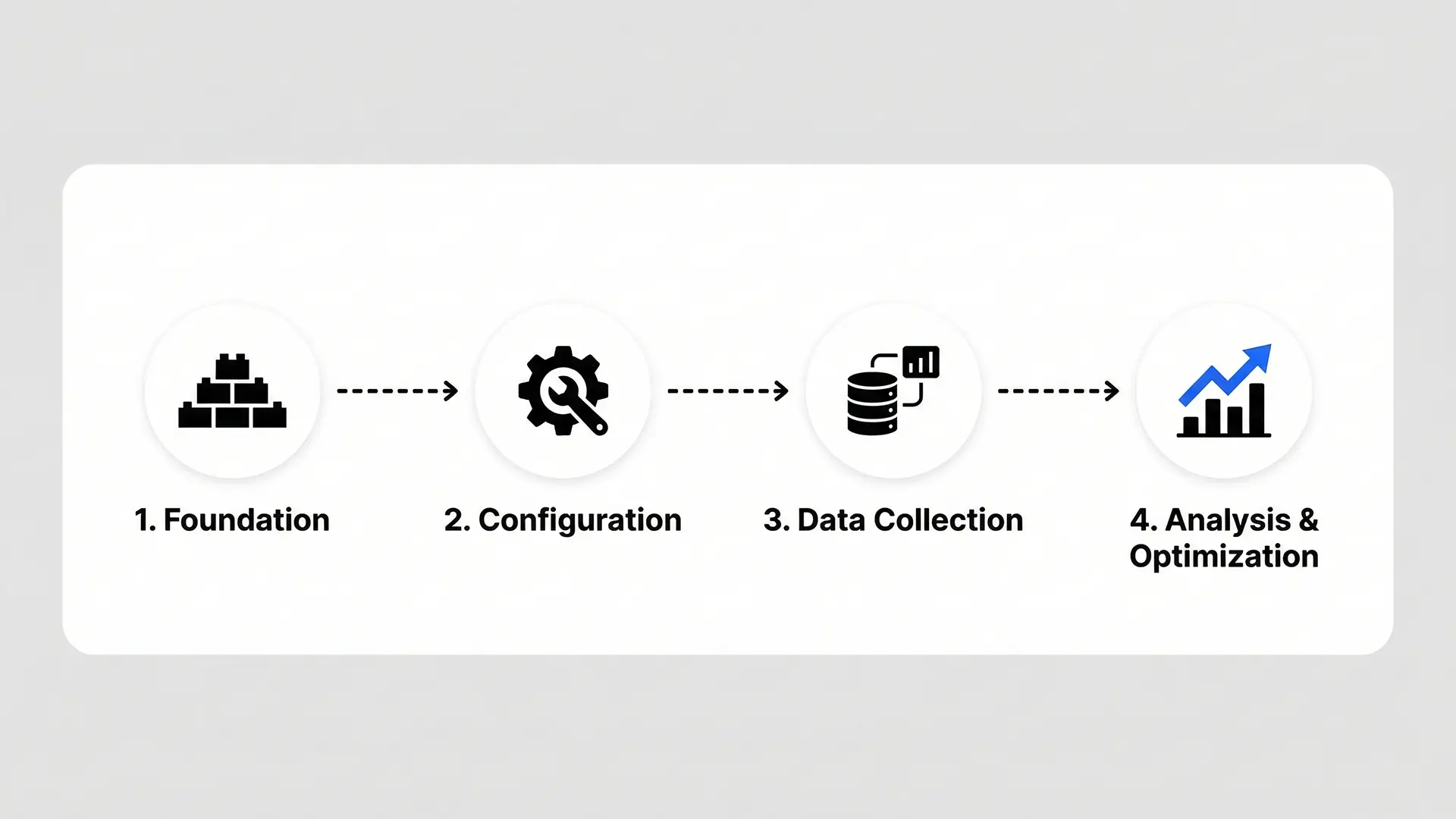
Phase 1: Foundation (Weeks 1-2)
Define what success looks like: E-commerce tracks revenue and conversion rate. Lead generation tracks lead volume and cost per lead. Subscription tracks trial starts and lifetime value.
Check your tracking: Run through this checklist:
- Analytics platform installed correctly
- Conversion goals and events set up
- Cross-domain tracking configured
- Bot traffic filtering turned on
- Internal traffic excluded
About 25% of websites have broken tracking. Fix that first.
Phase 2: Configuration (Week 3)
Setting up attribution in Google Analytics 4: 1. Go to Advertising → Attribution → Attribution Settings 2. Pick your model (start with Linear or Position-Based) 3. Set your attribution window to 30 days 4. Save and let it collect data
Create UTM parameter standards: Use consistent naming—always lowercase, use underscores for spaces, document your system. 40% of marketers admit their UTM usage is inconsistent. Don't be part of that statistic.
Phase 3: Data Collection (Months 2-3)
You need 60-90 days minimum. Attribution needs enough data to spot patterns. During this time, check data quality weekly and don't make decisions yet.
Phase 4: Analysis and Optimization (Month 4+)
Compare attribution models in your analytics platform. Look for channels gaining credit in multi-touch models—those are undervalued. Start small when shifting budget (10-20%), and give changes 3-6 months to show results.
What This Looks Like in Practice
Case Study: DTC Skincare Brand
Starting point: $87,000 monthly marketing spend, $312,000 revenue, using last-click attribution. Email showed 31% of revenue, paid social only 14%.
What they did: Switched to linear attribution, waited 90 days, compared models.
Discovery: Paid social was actually driving 28% of revenue, not 14%. It drove 35% of first touches but only got last-click credit 14% of the time.
Budget changes: Paid social up 45%, non-brand search up 30%, brand search down 20%.
Results after 90 days: Revenue up 23% to $384,000 on the same $87,000 spend. ROAS improved from 3.59x to 4.41x.
Case Study: Subscription Meal Kit Service
The problem: 45% customer churn within 90 days. Standard attribution showed similar CAC across channels ($35-42), but didn't reveal quality differences.
Their approach: LTV-based attribution analyzing 180-day cohorts by acquisition source.
The insight: Referral customers had 11.1x LTV:CAC ratio versus influencer customers at 3.1x. Similar acquisition costs hid drastically different business value.
Budget changes: Referral program up 250%, SEO up 180%, influencer down 60%.
Results: 180-day retention up 19 percentage points, customer LTV up 43%, net revenue per cohort up 59%.
Dealing with Privacy Changes
The attribution landscape is shifting. iOS App Tracking Transparency sees 75% opt-out rates. Third-party cookies are being phased out. Attribution systems now capture 50-70% of actual customer journeys, down from 80-90% historically.
How to adapt:
- Build first-party data: Create direct customer relationships through accounts and loyalty programs. Use server-side tracking—improves accuracy 20-30%.
- Try Marketing Mix Modeling: Statistical analysis of aggregate spend versus outcomes. Privacy-compliant since it doesn't track individuals.
- Run incrementality tests: Move from attribution (correlation) to incrementality (causation) through geo-lift studies and holdout groups.
- Use a hybrid approach: First-party attribution for tactical optimization, MMM for strategic allocation, incrementality tests for validation.
Common Mistakes to Avoid
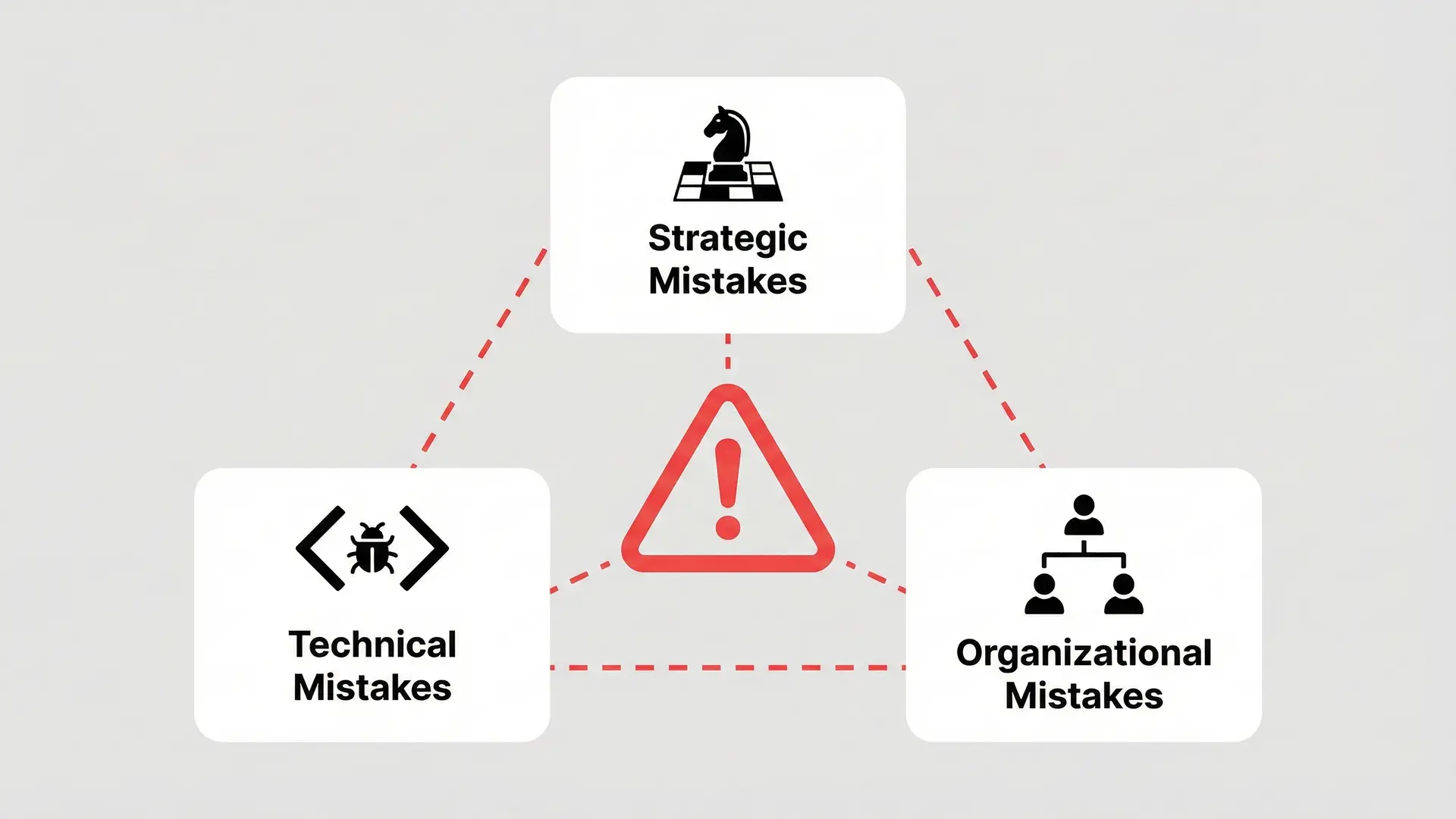
Strategic: Relying too much on last-click (60% of marketers still do), ignoring view-through conversions, attribution windows that are too short, treating attribution as absolute truth instead of directional guidance.
Technical: Broken tracking (affects 25% of websites), inconsistent UTM parameters, not filtering bot traffic (inflates numbers 10-20%).
Organizational: No clear owner for attribution strategy, data silos across teams, making huge budget changes without testing.
Tools by Budget
Small Business ($0-500/month): Google Analytics 4 (free), Wicked Reports. Focus on UTM discipline and basic multi-touch models.
Mid-Market ($500-5,000/month): HubSpot, Rockerbox, Triple Whale, Northbeam. Focus on cross-channel integration and data-driven models.
Enterprise ($5,000+/month): Adobe Analytics, Neustar MarketShare, Google Analytics 360. Focus on custom ML models and MMM integration.
Start with Google Analytics 4. Get good at fundamentals before spending money on advanced platforms.
The Bottom Line
B2C marketing attribution turns guesswork into strategy. Perfect attribution doesn't exist, but directionally accurate attribution delivers real returns.
The numbers: $71 billion wasted every year on poor attribution. 15-30% ROI improvement when you get it right. 50-70% journey visibility possible with current approaches.
You don't need a data science team. You need: 1. Consistent tracking fundamentals 2. An attribution model that fits your business stage 3. 60-90 days of data collection 4. Willingness to make evidence-based budget shifts 5. Continuous testing and refinement
Start with linear or position-based attribution. Move to data-driven as volume grows. Validate with incrementality testing. The businesses that win aren't the ones with perfect data—they're the ones making better decisions today than yesterday.
Stop guessing where your marketing dollars go. Start measuring, testing, and optimizing. Your next 15-30% ROI improvement is sitting in the data you're already collecting.