

LinkedIn Impressions for B2B Marketing: What They Are and Why They Matter
B2B marketers consistently face a critical question: how do LinkedIn impressions translate into measurable pipeline results?
According to Gartner’s 2025 survey, organizations allocate approximately 32% of their B2B advertising budgets to LinkedIn. Despite this significant investment, most companies lack the ability to connect impression data to revenue outcomes—a substantial attribution gap that undermines marketing effectiveness.
This guide examines LinkedIn impressions in detail: their definition, the three distinct types, and methods for tracking their contribution to business results.
What Are LinkedIn Impressions?
LinkedIn’s definition is specific: an impression is counted when your content appears on a member’s screen for at least 300 milliseconds with at least 50 percent of the post in view.
So when you see “5,000 impressions” on a post, that means 5,000 people had your content on their screen long enough to potentially read it. Not that they engaged with it—but they had the opportunity.
The Three Types of LinkedIn Impressions
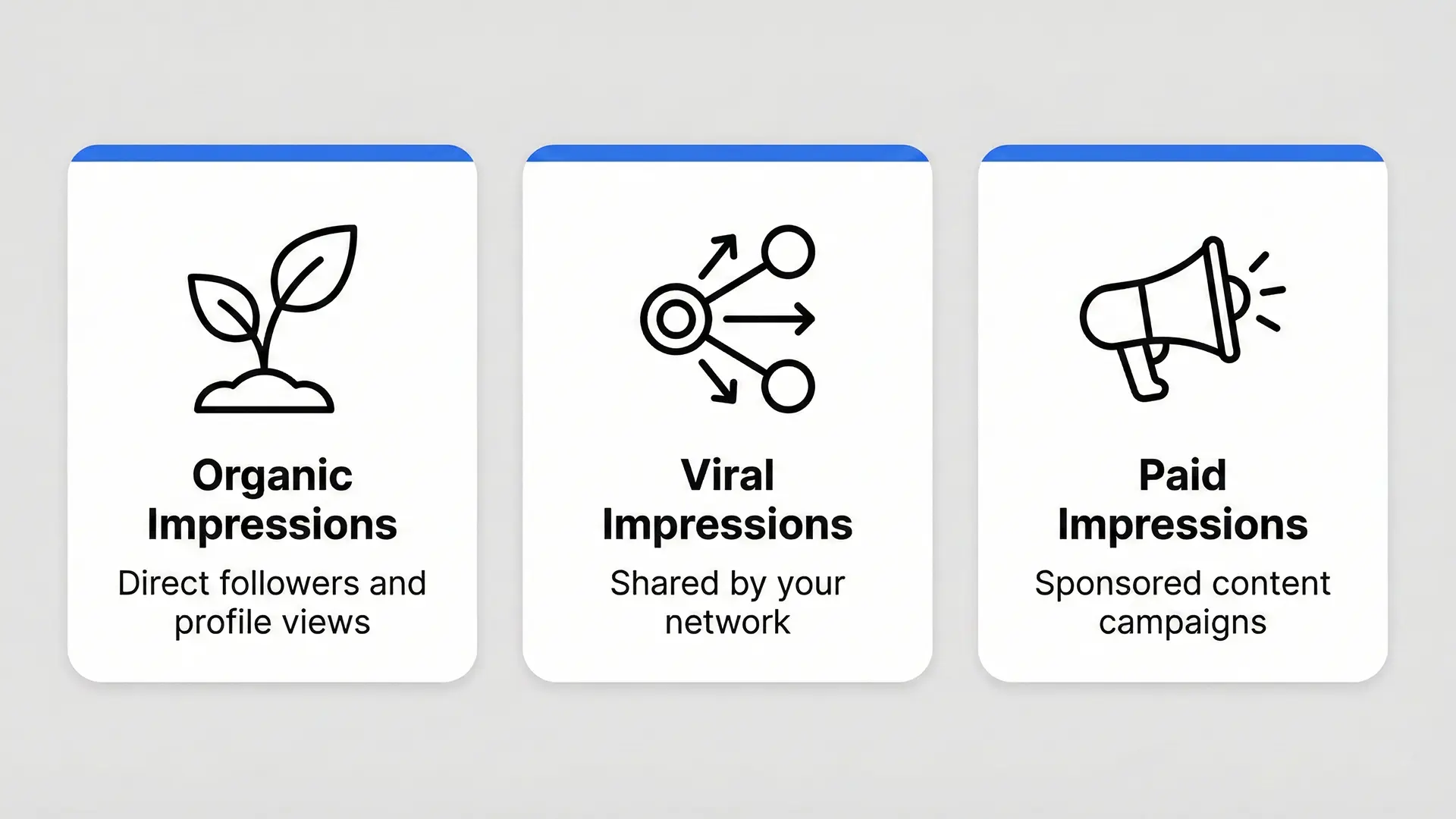
1. Organic Impressions
LinkedIn’s algorithm shows your content based on relevance and engagement likelihood. Your connections and followers see posts organically, and strong early engagement triggers amplification.
Typical range: Individual profiles get 500-2,000 impressions; company pages get 2,000-10,000.
2. Viral Impressions
Created when connections share or comment on your content, exposing it to their networks. A post with 500 organic impressions can generate 5,000+ viral impressions if engagement’s strong.
Pro tip: Track your viral-to-organic ratio. Below 1.2x? Your content isn’t compelling enough to share.
3. Paid Impressions
Targeted impressions through LinkedIn Campaign Manager. You define your audience by job title, company size, and industry—then pay based on CPM or CPC.
2025 Benchmarks: - B2B SaaS: $28-45 CPM, 0.35-0.65% CTR - Enterprise Tech: $35-55 CPM, 0.30-0.55% CTR
Yes, B2B CPMs are 3-5x higher than B2C. But you’re targeting decision-makers who influence $500K+ purchases. Context matters.
Unique vs Total Impressions
Total Impressions: How many times content was displayed (includes repeat views)
Unique Impressions: How many distinct individuals saw it
In B2B sales cycles of 3-12 months, repeat impressions are valuable. Decision-makers need 7-13 touchpoints before engaging. The optimal frequency: - 1-2 impressions: Awareness - 3-5 impressions: Consideration - 6-10 impressions: Familiarity - 10+ impressions: Risk of ad fatigue
Why LinkedIn Impressions Matter for B2B
The numbers speak: - 32-34% of B2B ad budgets go to LinkedIn - 78% of B2B marketers rate LinkedIn as the most effective social platform - Average B2B buying committee: 5-10 decision-makers consuming 13-27 content pieces before purchase
Impressions are early-stage touchpoints. Without healthy impression volume in months 1-3, you won’t have leads in months 4-7 or deals closing in months 8-12.
The math: 100,000 impressions → 500 website visitors (0.5% CTR) → 40 MQLs (8% conversion) → 6 SQLs → 1-2 closed deals
Those Q1 impressions generate Q3-Q4 revenue.
The Attribution Challenge
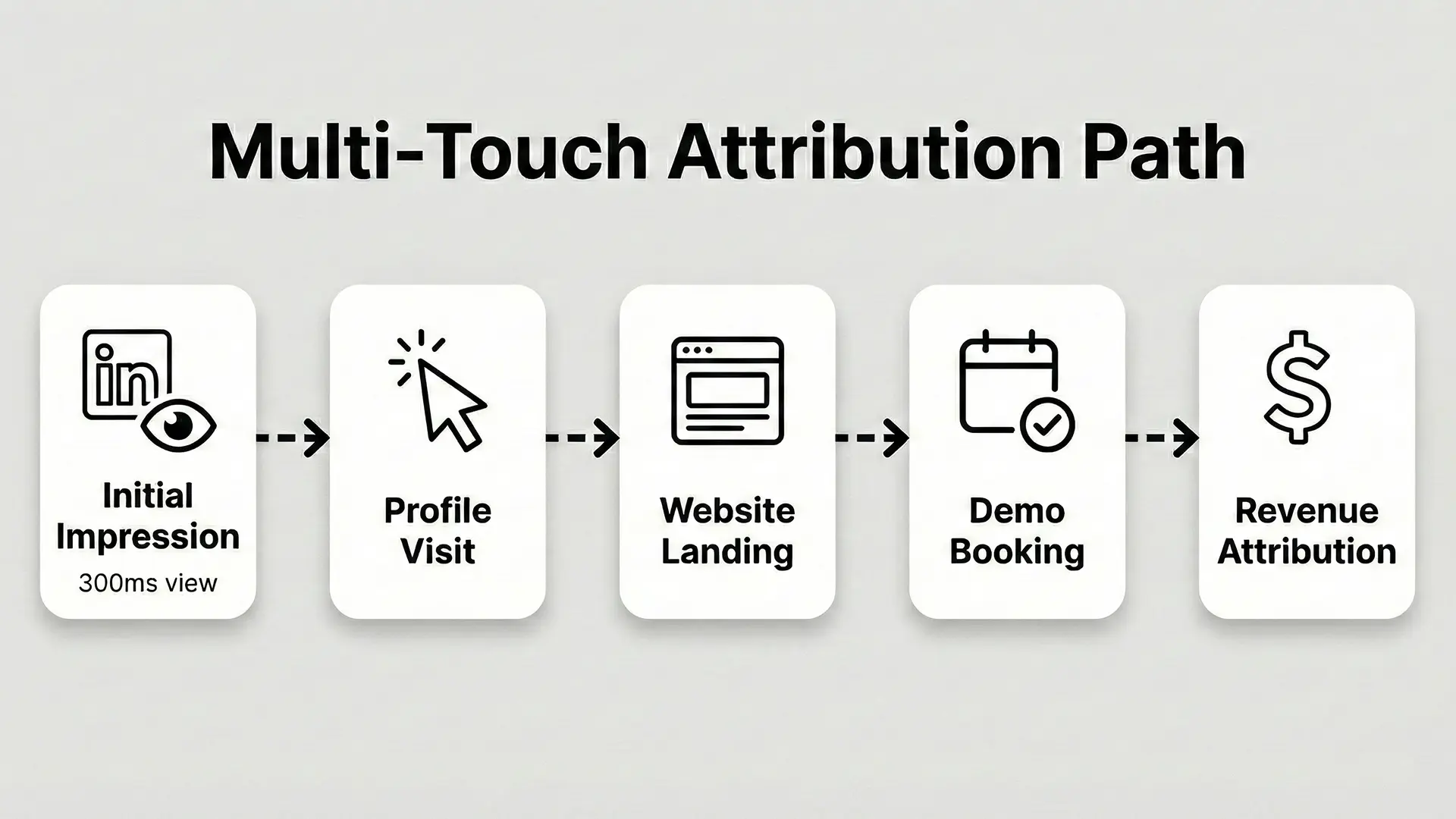
Here’s the problem: standard touch-based attribution fails for LinkedIn impressions.
Why? - Long time lag (impression in January, deal closes in September) - Multi-stakeholder complexity (VP saw your post, CFO made the decision) - Cross-device tracking gaps - Anonymous impressions (LinkedIn doesn’t reveal who saw what)
This is where multi-touch attribution platforms like Observix become critical. They connect early-stage impressions to revenue by tracking full customer journeys across multiple touchpoints, stakeholders, and timeframes.
Real example: A B2B SaaS company discovered LinkedIn impressions deserved 18% credit under multi-touch attribution—but received only 3% under last-click. That’s a 6x difference. They increased LinkedIn budget by $50K and generated $400K additional pipeline.
Key Metrics to Track
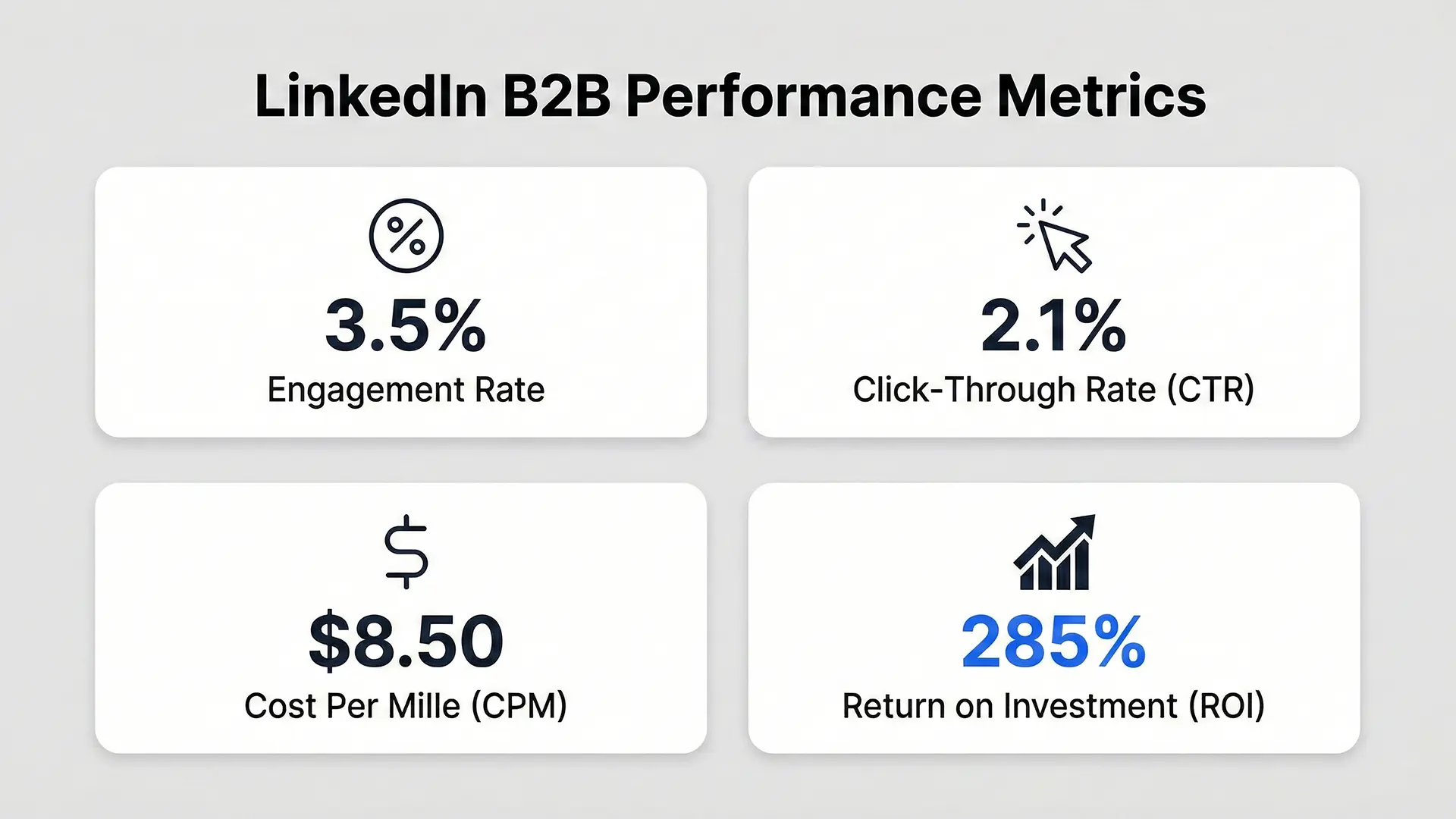
Don’t just track raw volume. Focus on:
1. Engagement Rate Formula: (Engagements / Impressions) × 100 Benchmark: 2-4% good, 5%+ excellent
2. Viral Amplification Rate Formula: Viral Impressions / Organic Impressions Benchmark: 1.2-1.8x average, 3x+ excellent
3. Impression-to-MQL Rate Formula: (MQLs attributed to LinkedIn / Impressions) × 100 Benchmark: 0.03-0.08% Requires: Multi-touch attribution platform
Quick Optimization Tips
For Organic Impressions: - Post Tuesday-Thursday, 7-9 AM or 12-1 PM EST - Use text posts (1,300-2,000 characters) or native PDFs - Respond to comments within the first hour
For Viral Impressions: - Tag 3-5 relevant people per post - Create share-worthy content: original data, controversial takes, specific case studies - Leverage employee advocacy (50 employees × 500 connections = 25,000 potential reach)
For Paid Impressions: - Allocate 50% to awareness, 30% to consideration, 20% to conversion - Target 3-5x ROI minimum
Common Mistakes to Avoid
1. Obsessing over vanity metrics — Track impression-to-revenue, not just volume
2. Ignoring impression quality — Low engagement means people scrolled past
3. Using last-click attribution — It gives LinkedIn 0% credit when conversions happen weeks later
4. Treating all impression types equally — Each serves different funnel purposes
The Bottom Line
LinkedIn impressions are valuable—but only if you can connect them to business outcomes.
If you’re spending $50K+ annually on LinkedIn and can’t say which campaigns drive pipeline, implement proper attribution tracking. Platforms like Observix unify your marketing data to show which content generates highest-value leads, how many impressions decision-makers need before converting, and true ROI across organic, viral, and paid efforts.
With 32-34% of B2B budgets flowing to LinkedIn, getting attribution right on this channel alone can transform your marketing ROI.
The question isn’t whether LinkedIn impressions matter. It’s whether you’re measuring them correctly.