


Introduction
Marketing analytics is evolving faster than ever — and in 2025, data isn’t just about measurement, it’s about direction. As competition intensifies and every click, channel, and impression gets more expensive, the real winners will be the brands that connect analytics to outcomes — from marketing actions to measurable Marketing ROI.
Emerging technologies like AI, predictive analytics, and multi-channel attribution are reshaping how decisions are made. Platforms like ObserviX help marketing and growth teams connect every touchpoint in the customer journey, understand the full impact of their investments, and act on insights with speed and accuracy.
This guide breaks down the key marketing analytics trends you need to know in 2025 and how to leverage them to stay ahead.
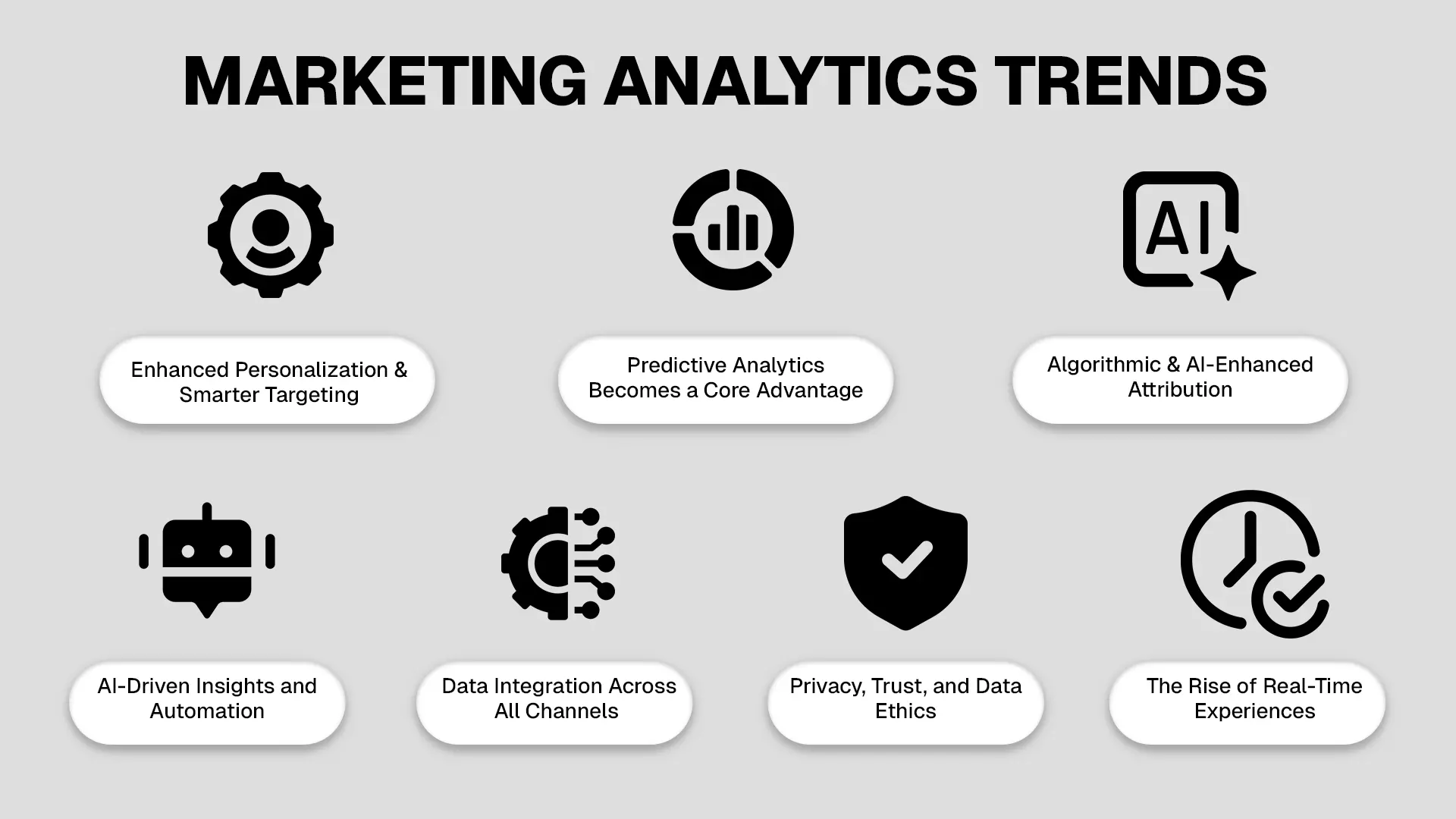
1. Enhanced Personalization & Smarter Targeting
By 2025, personalization will define competitiveness. Audiences no longer respond to generic messaging; they expect precision — content that feels tailor-made for them.
To achieve that level of personalization, marketers must integrate and analyze data from every channel:
- Web Analytics – Understand behavior patterns, not just visits. According to Think with Google, users are more likely to engage when personalization aligns with their real-time intent signals.
- Social Engagement – Go beyond likes and clicks; connect engagement data with downstream ROI.
- CRM & Purchase Data – Integrate with CRM systems to connect marketing actions to real outcomes.
AI-driven clustering and segmentation now group customers based on behaviors and predicted intent, helping teams personalize messaging, automate campaigns, and scale efficiently.
2. Predictive Analytics Becomes a Core Advantage
Reactive marketing is over. In 2025, predictive analytics separates proactive brands from those playing catch-up.
By combining data from multiple sources and applying predictive models, marketers can forecast performance trends, anticipate demand, and optimize spend before results even appear.
Best practices include:
- Aggregating data from engagement, ad spend, and conversions.
- Applying regression or AI-based forecasting to predict which campaigns will yield the highest ROI.
- Iterating models based on real-time performance feedback.
This approach transforms marketing from a reactive cost center into a predictive growth engine.
3. Algorithmic & AI-Enhanced Attribution
Traditional last-click attribution is outdated. In 2025, AI-powered multi-touch attribution will dominate — mapping every step of the buyer journey to its actual contribution.
Leading analytics ecosystems (like ObserviX) now use machine learning to calculate the true weight of each interaction. That means marketers can finally see how much value each channel, campaign, or keyword really drives toward Marketing ROI.
To stay competitive:
- Capture complete customer journey data.
- Use algorithmic attribution to identify which sequences drive conversions.
- Visualize results for faster, data-driven investment decisions.
This replaces guesswork with confidence — and turns analytics into strategy.
4. AI-Driven Insights and Automation
AI has become the heartbeat of modern analytics. It automates what once took teams days — detecting anomalies, surfacing insights, and suggesting optimizations instantly.
Marketers now rely on AI to:
- Detect performance shifts early.
- Generate real-time ROI dashboards.
- Recommend “next best actions” based on predictive patterns.
As highlighted in the Google Cloud AI Business Trends 2025 report, the future of analytics depends on systems that continuously learn from new data to guide marketing in real time.
This automation allows teams to spend less time reporting — and more time scaling what works.
5. Data Integration Across All Channels
The biggest challenge isn’t a lack of data — it’s fragmentation. In 2025, unifying marketing data is essential for accurate ROI measurement.
To achieve this:
- Maintain consistent data schemas across platforms.
- Automate collection and cleaning through APIs.
- Audit data monthly to prevent decision errors.
When every channel’s data is integrated, marketers can finally see how each effort contributes to total Marketing ROI — holistically, not in silos.
6. Privacy, Trust, and Data Ethics
Data privacy continues to tighten globally, and transparency has become a competitive advantage.
Marketers should:
- Prioritize first-party data collection.
- Clearly disclose how analytics data is used.
- Regularly audit consent flows and anonymization.
Platforms built around these principles — such as ObserviX — help ensure compliance with GDPR and CCPA while maintaining accurate tracking.
7. The Rise of Real-Time Experiences
Consumers expect personalized, instant experiences across every channel. To meet these expectations, marketers must act in real time — adjusting campaigns as behavior changes.
Real-time analytics and predictive alerts help brands:
- Engage users at the optimal moment.
- Ensure consistent messaging across touchpoints.
- Continuously test and refine based on live feedback.
Agility, not volume, will define marketing success in 2025.
Final Checklist for 2025 Marketers
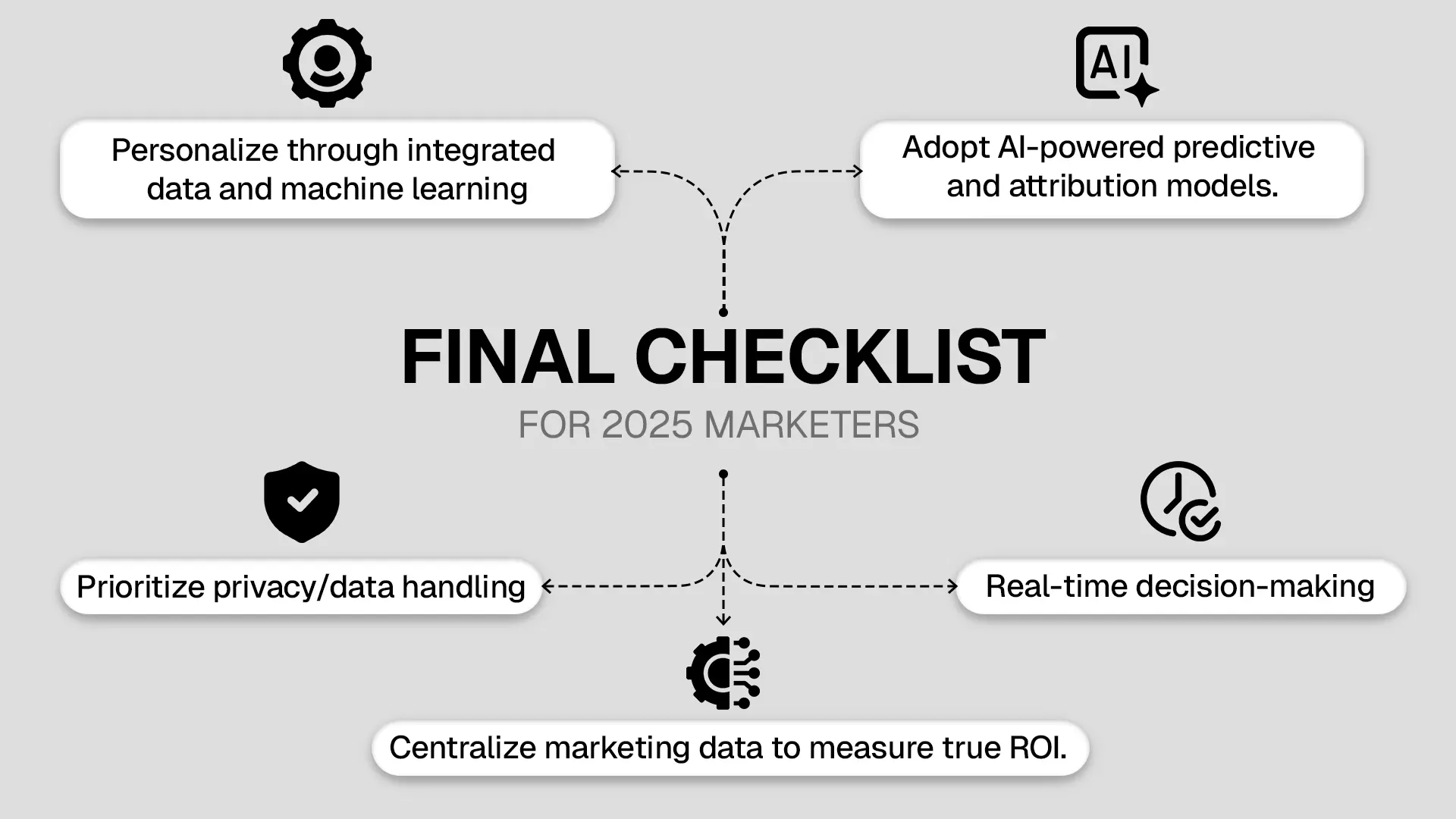
✅ Personalize through integrated data and machine learning. ✅ Adopt AI-powered predictive and attribution models. ✅ Centralize marketing data to measure true ROI. ✅ Prioritize privacy and ethical data handling. ✅ Move from reporting to real-time decision-making.
Conclusion: From Data to Decisions — Faster
Marketing in 2025 isn’t about collecting more data — it’s about turning data into profit. Brands that focus on Marketing ROI, not vanity metrics, will lead the next era of growth.
With ObserviX, every marketing action becomes measurable, every channel accountable, and every decision data-backed — helping growth teams make smarter, faster, ROI-driven decisions.