

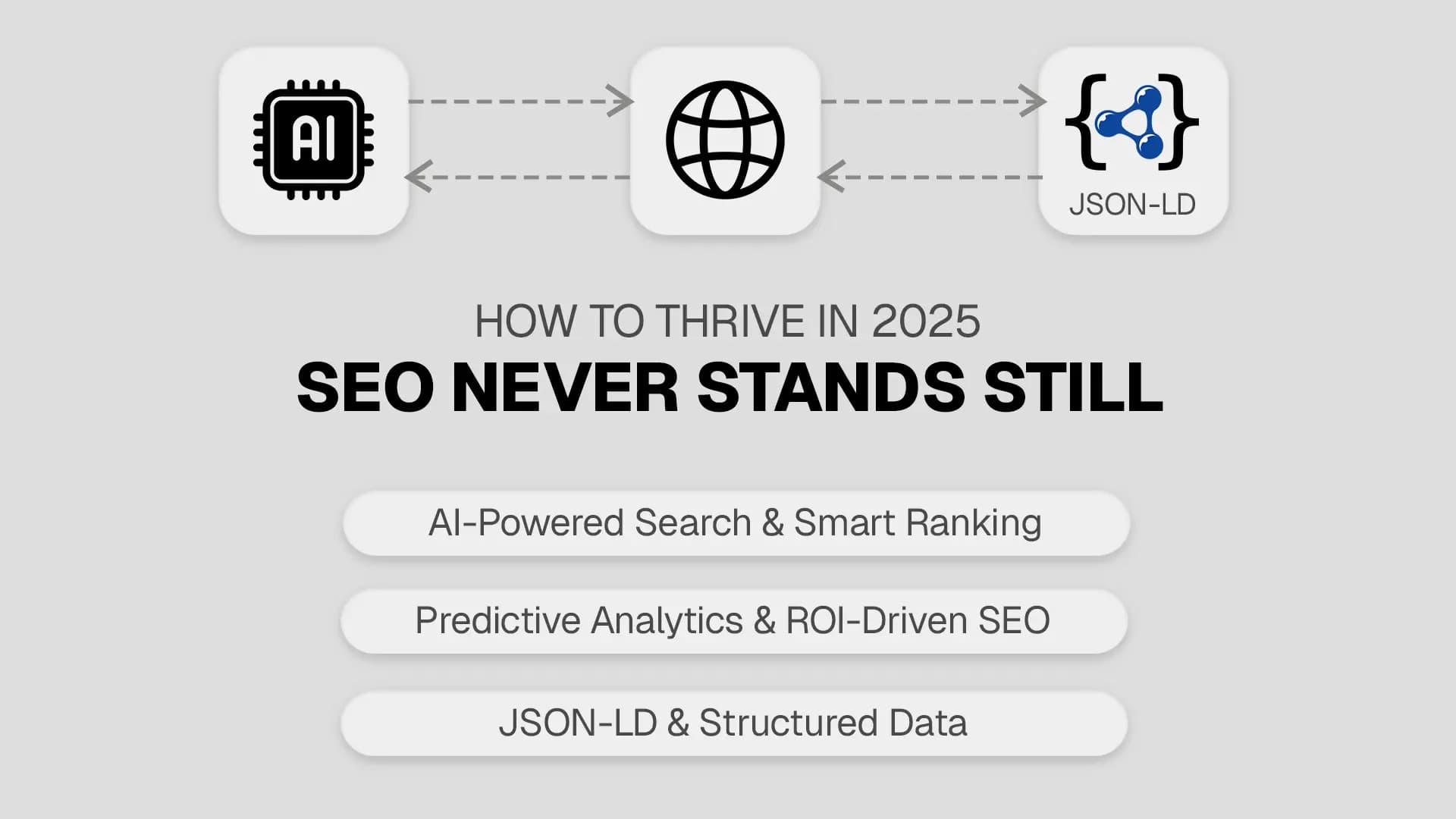
SEO Never Stands Still: How to Thrive in 2025
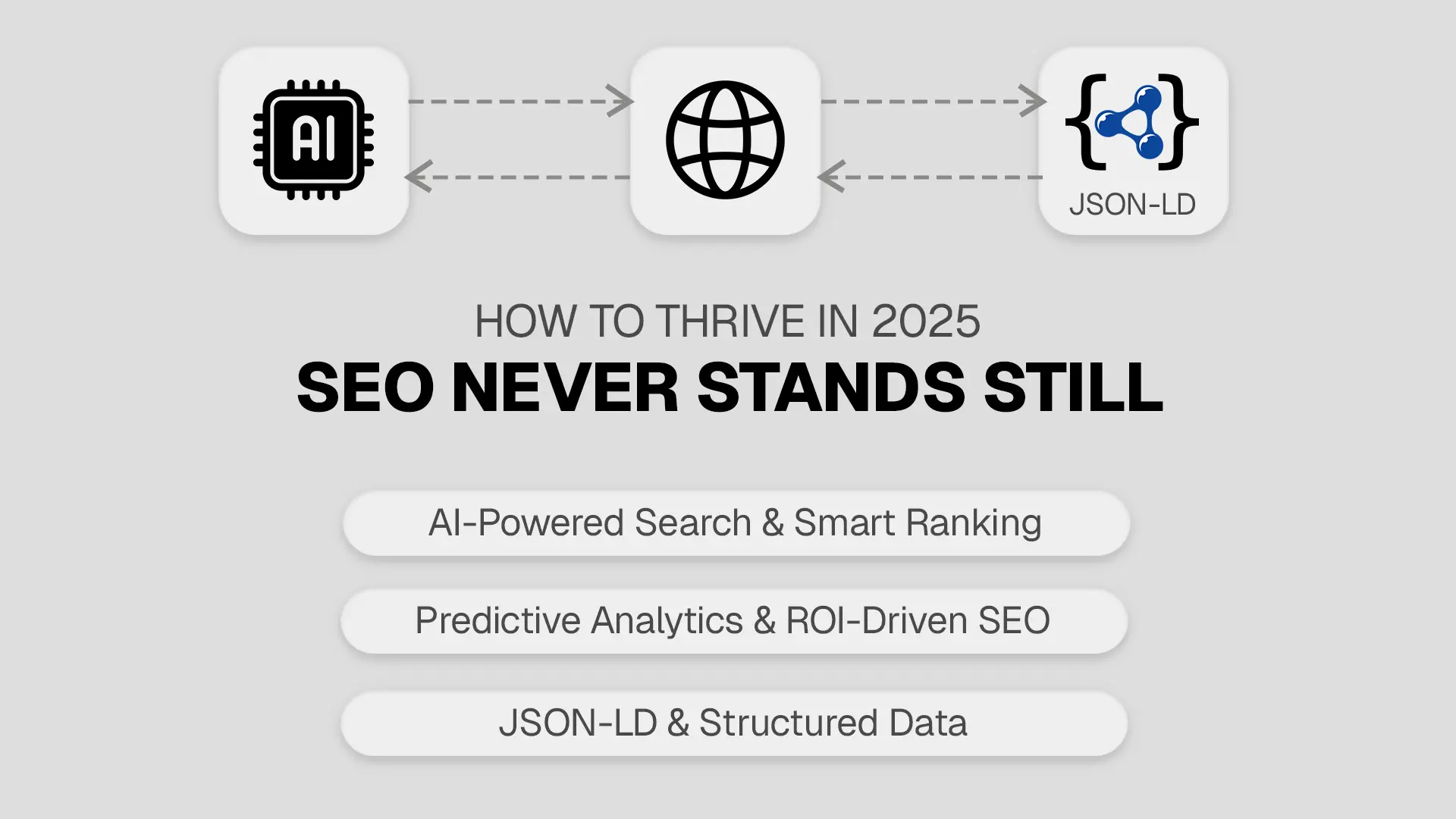
Over the past year, Google has redefined how users discover information online — from AI Overviews to multimodal search results. As a result, many websites that once thrived on traditional keyword strategies saw dramatic traffic shifts. To stay ahead in 2025, marketers must focus not only on visibility but also on measurable marketing ROI.
1. AI-Powered Search & Smart Ranking
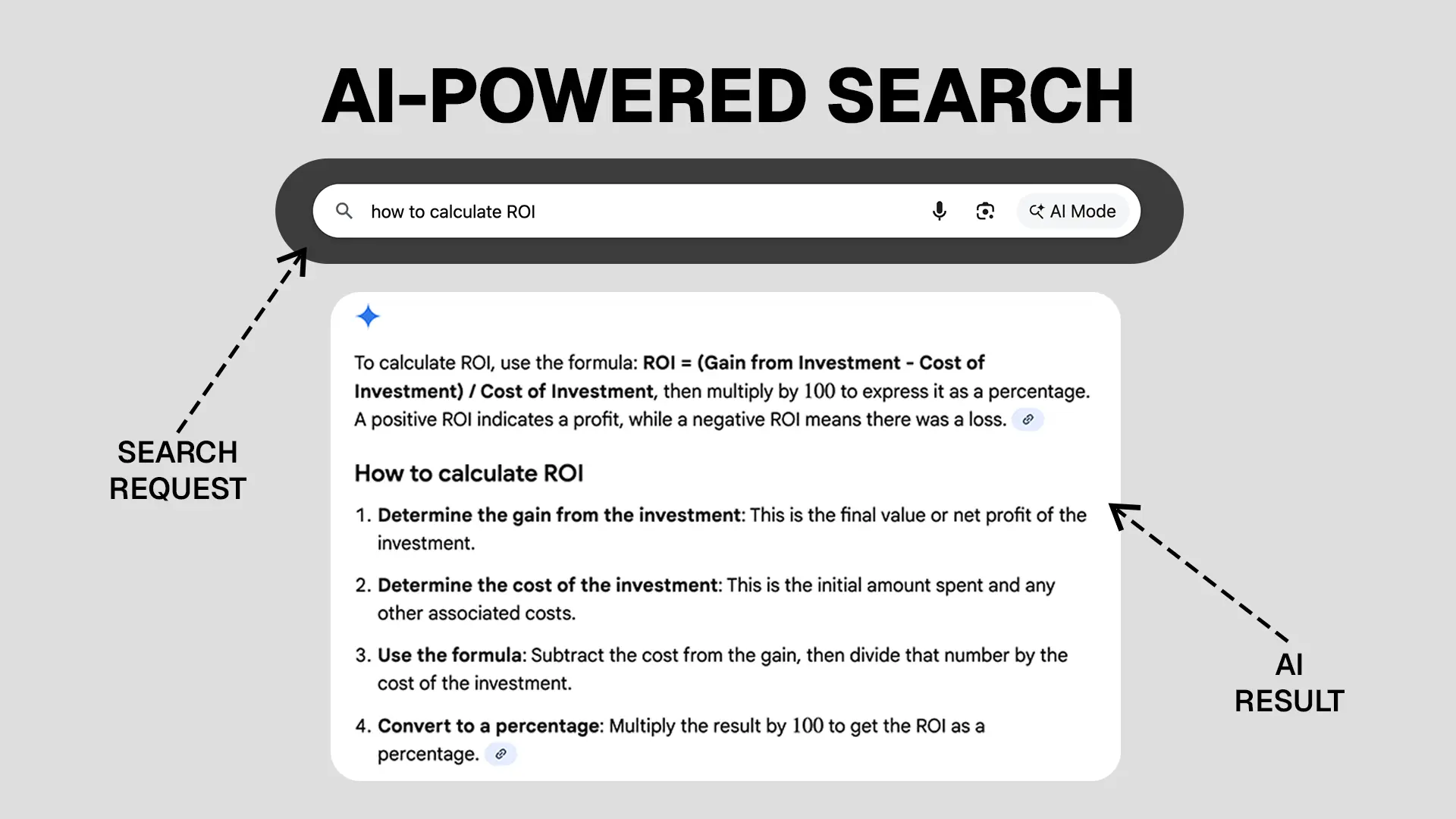
The rise of AI-driven search experiences — especially throughGoogle AI Overviews — is transforming how brands appear in results. Instead of ranking for static keywords, success now depends on intent-driven, conversational content that AI models can understand and trust.
Key moves for 2025:
- Optimise content for conversational, question-based searches.
- Use structured data and concise summaries (40–60 words) to capture AI snippets.
- Identify and fill content gaps that AI still fails to answer in depth.
2. Growing Importance of E-E-A-T
Quality, credibility, and experience matter more than ever. Google’s emphasis on Expertise, Experience, Authoritativeness, and Trustworthiness means your site’s technical health and content depth both carry weight. Google Search Central Blog outlines how the future of ranking depends as much on who says it as on what’s said.
Practical steps:
- Showcase authorship and credentials.
- Keep technical performance spotless — fast load times and clean UX.
- Build content clusters that demonstrate depth and authority.
3. Predictive Analytics & ROI-Driven SEO
With AI reshaping search, marketers must measure not just visibility — but business impact. This is where ObserviX becomes crucial: by connecting marketing channel performance with Marketing ROI, it helps growth teams understand which keywords, pages, and campaigns actually drive profit, not just clicks.
Predictive analytics will also dominate SEO strategy. Data-driven insights can forecast ranking shifts, identify emerging topics, and guide smarter investment allocation — ensuring every optimisation dollar contributes to measurable return.
4. Voice, Video & Visual Search Convergence
Voice assistants, YouTube Shorts, and Google Lens are converging into one discovery ecosystem. Search is becoming multimodal — users no longer just type queries; they ask, show, or record them.
Marketers should:
- Optimise video metadata, transcripts, and chapters.
- Prepare for voice search through conversational tone and intent alignment.
- Use structured data for media assets (VideoObject, ImageObject).
5. Data Privacy & Ethical Automation
As automation grows, so do compliance challenges. GDPR, CCPA, and emerging AI-ethics standards demand that marketing systems respect user consent and handle data transparently. Leading platforms — including ObserviX — now embed privacy-first data handling into their architecture to ensure marketers can optimize performance without compromising trust.
6. JSON-LD & Structured Data: A Technical Advantage
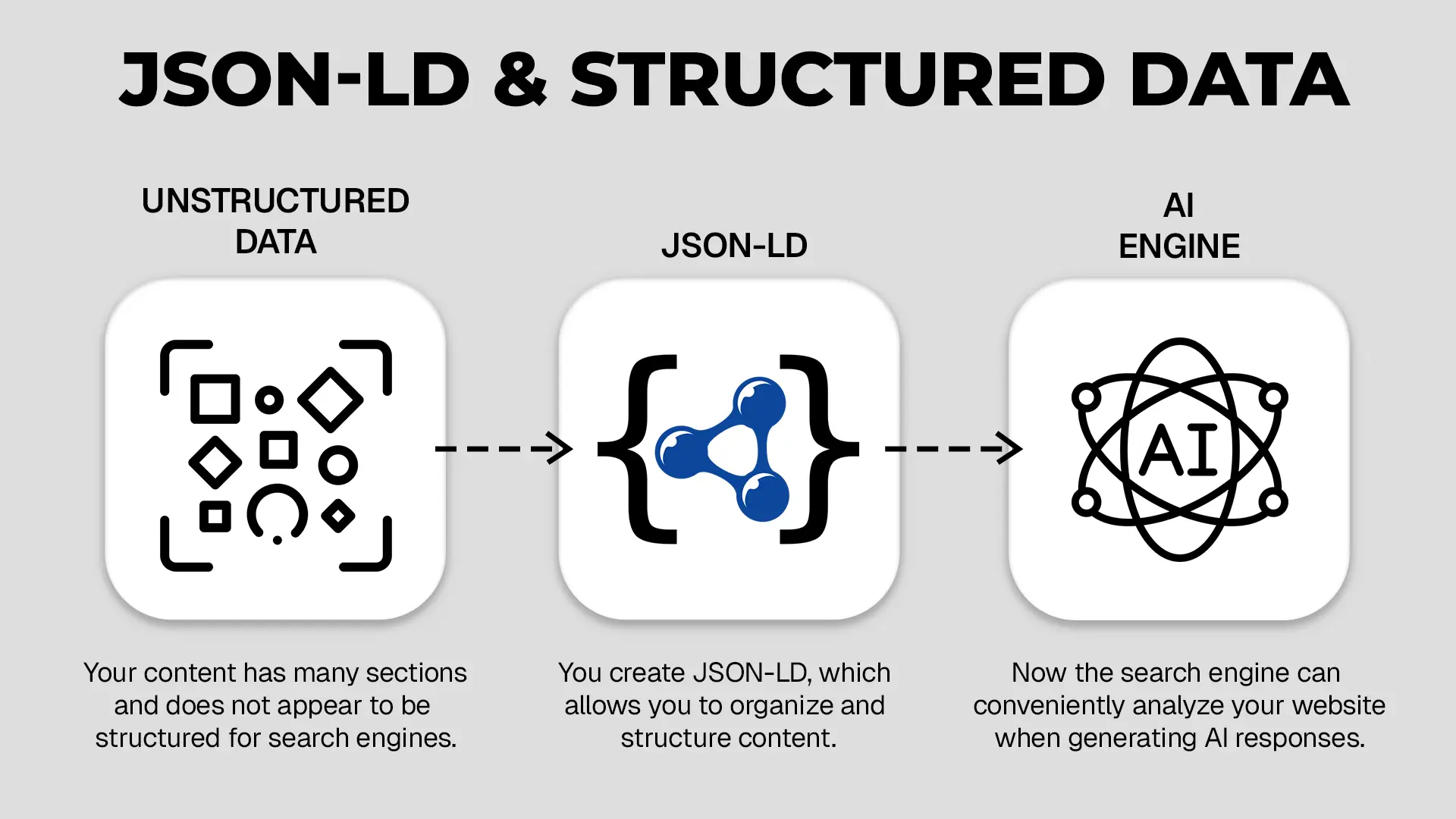
Structured data in the form of JSON-LD is increasingly foundational for how search engines interpret content. Google recommends using JSON-LD as the preferred format for structured data when your setup supports it.
Why it matters:
- It enables rich results: reviews, FAQ boxes, event panels, and knowledge graphs.
- It helps AI and search systems map context, relationships, and entities.
- It separates machine-readability from visible content, reducing errors and simplifying implementation.
What to do:
- Add JSON-LD scripts (e.g., for Article, Organization, FAQ) into your page head or body.
- Keep markup aligned with visible content: dates, authors, images must match.
- Validate with Google’s Rich Results Test and other schema tools.
- For more details and examples, see our guide on structured data: JSON-LD Schema for SEO: What Marketers Should Know.
7. The Future of SEO: From Clicks to Context
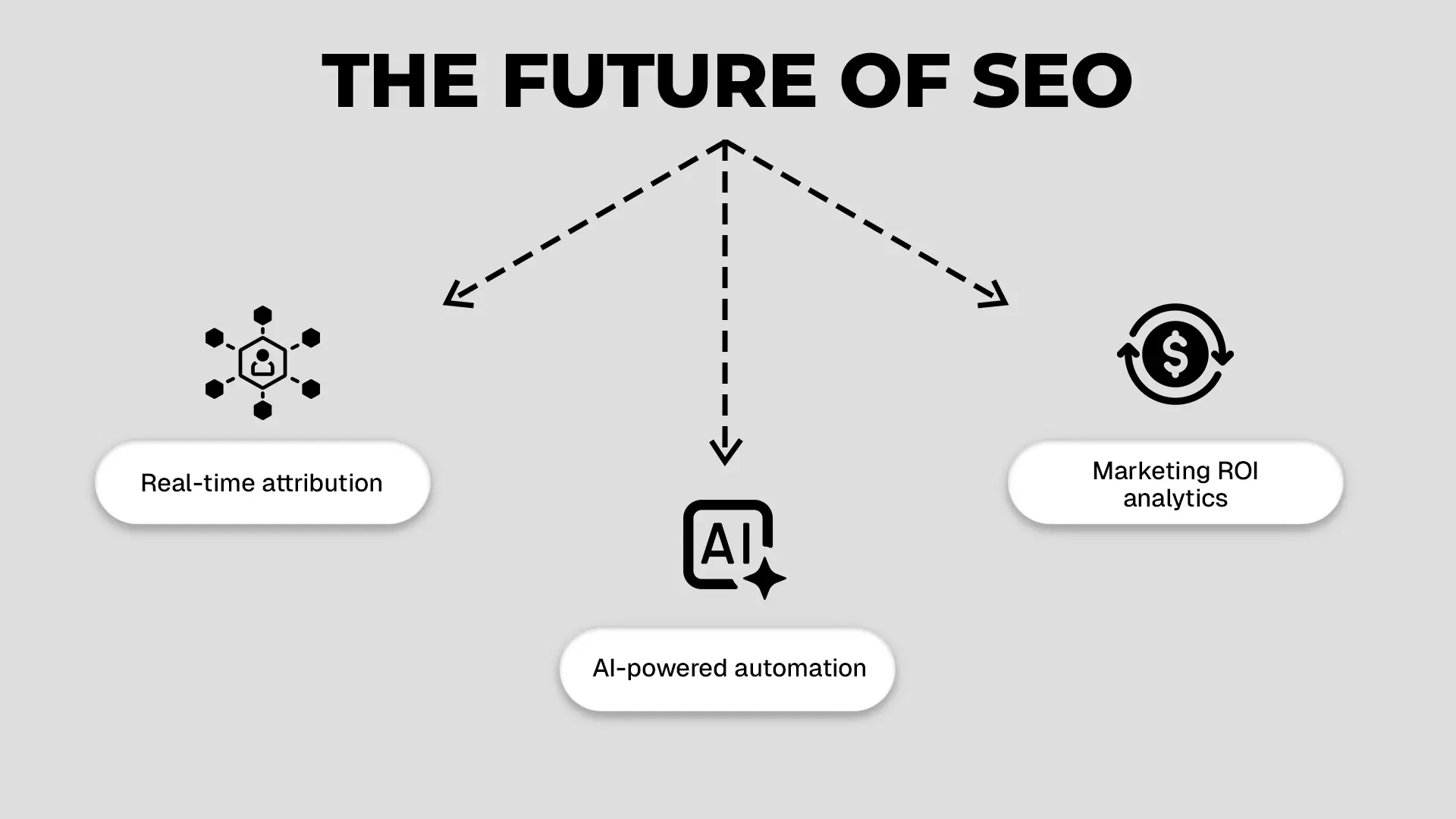
SEO in 2025 is about depth, trust, and ROI. Ranking for keywords is no longer the final goal — driving measurable growth is. Marketers who combine AI-powered automation, Marketing ROI analytics, and real-time attribution will dominate the next decade of digital competition.
Final Takeaway
The future of SEO is hybrid: human creativity guided by machine intelligence, with ROI as the ultimate measure. Those who act early — adapting to AI search, building trust, leveraging JSON-LD, and tracking Marketing ROI with ObserviX — will not just survive but lead the next evolution of digital visibility.