

Introduction
If your paid-search campaigns drive steady traffic but conversions remain weak, the issue rarely lies in the ads. The true bottleneck is usually what happens after the click. A PPC (Pay-Per-Click) landing page is the pivotal moment where attention must turn into action — and when it doesn’t, budgets bleed fast.
Creating high-performing PPC landing pages requires more than good design. It requires message match, clarity, intent alignment, and clean data that allows you to understand not only what converts but why. These principles become even more powerful when paired with precise analytics and attribution insights, especially for teams working with structured data approaches like advanced attribution methods and conversion data accuracy.
1. What Is a PPC Landing Page?
A PPC landing page is the destination a user sees after clicking your ad. Unlike a homepage, which serves multiple purposes, this page exists for a single goal — conversion. Every element on the page, from the headline to the final CTA, must support that goal.
When a user clicks your ad, you’ve already paid. The landing page determines whether that investment becomes a conversion or a wasted budget line. And because PPC traffic is highly intent-driven, even small inconsistencies between the ad and the landing page can undermine performance. This is also where understanding attribution nuances becomes important, as campaigns often appear weak due to poor tracking rather than poor execution.
2. Why PPC Landing Pages Matter
Optimized PPC landing pages are essential for three reasons:
Higher conversion rates
A single-purpose page removes distractions and guides visitors toward the only action you want them to take. Strong message match also increases trust and reduces cognitive load.
Better ad relevance
Landing pages aligned with ad messaging improve relevance and Quality Score, reducing CPCs and increasing impression share. The clearer the alignment, the more efficient the spend.
Cleaner funnel tracking
Dedicated pages simplify performance measurement. With an isolated flow, you can confidently evaluate the impact of content, creative, and audience segments — especially when working with structured event data and avoiding pitfalls in GA4 tracking limitations.
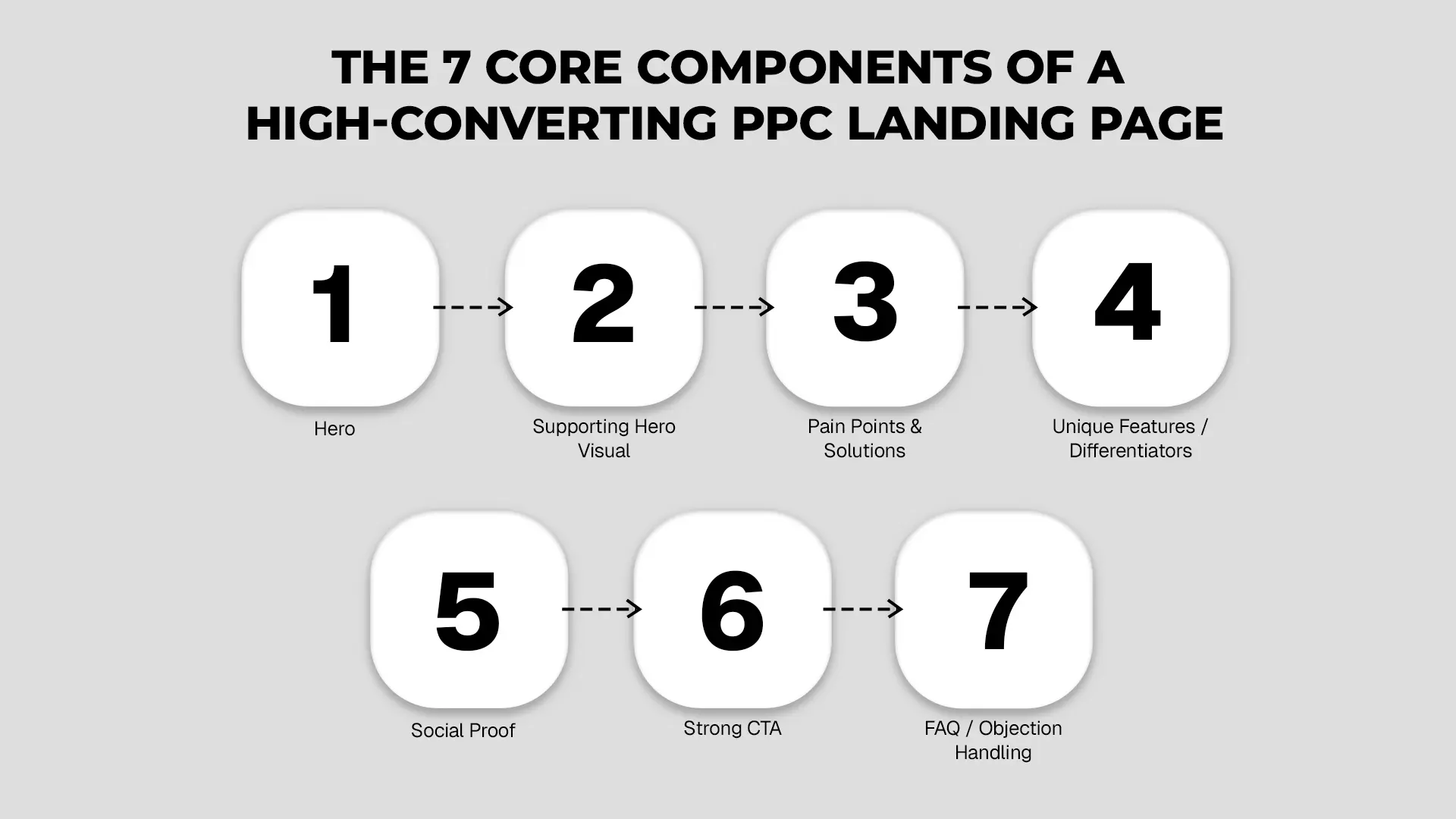
3. The 7 Core Components of a High-Converting PPC Landing Page
1. Hero
Your headline and subhead must mirror the ad’s promise. This is the first moment of the message match. If your ad says “Automated Reporting in Minutes,” your page can’t open with “Business Intelligence Solutions.”
2. Supporting Hero Visual
Strong visuals reinforce the benefit and reduce uncertainty. Videos, GIF demos, or real product screenshots typically outperform generic stock photography.
3. Pain Points & Solutions
Visitors arrive with a problem. Address it explicitly, then present the solution clearly. Pages that articulate the pain early see lower bounce rates and higher engagement.
4. Unique Features / Differentiators
After presenting the solution, clarify why your solution is the best option. Short feature blocks, comparison points, clear value propositions — all improve clarity and demonstrate credibility.
This is also a natural moment to link contextually to deeper content about methodology or analytics frameworks, such as insights from attribution model comparisons.
5. Social Proof
Testimonials, review badges, usage numbers, and recognizable brands reduce risk perception. In PPC landing pages, proof is not optional — it is conversion infrastructure.
6. Strong CTA
Your CTA needs to be visible, repeated, and benefit-oriented. “Get Started Free” outperforms “Submit” almost universally. Consider placing CTAs after each section.
7. FAQ / Objection Handling
Questions slow conversions. Address pricing, contracts, setup time, guarantees, and expected experience. Structured Q&A formats help create clarity and reduce anxiety.
4. Best Practices for Designing High-Performing PPC Landing Pages
Choose One Goal
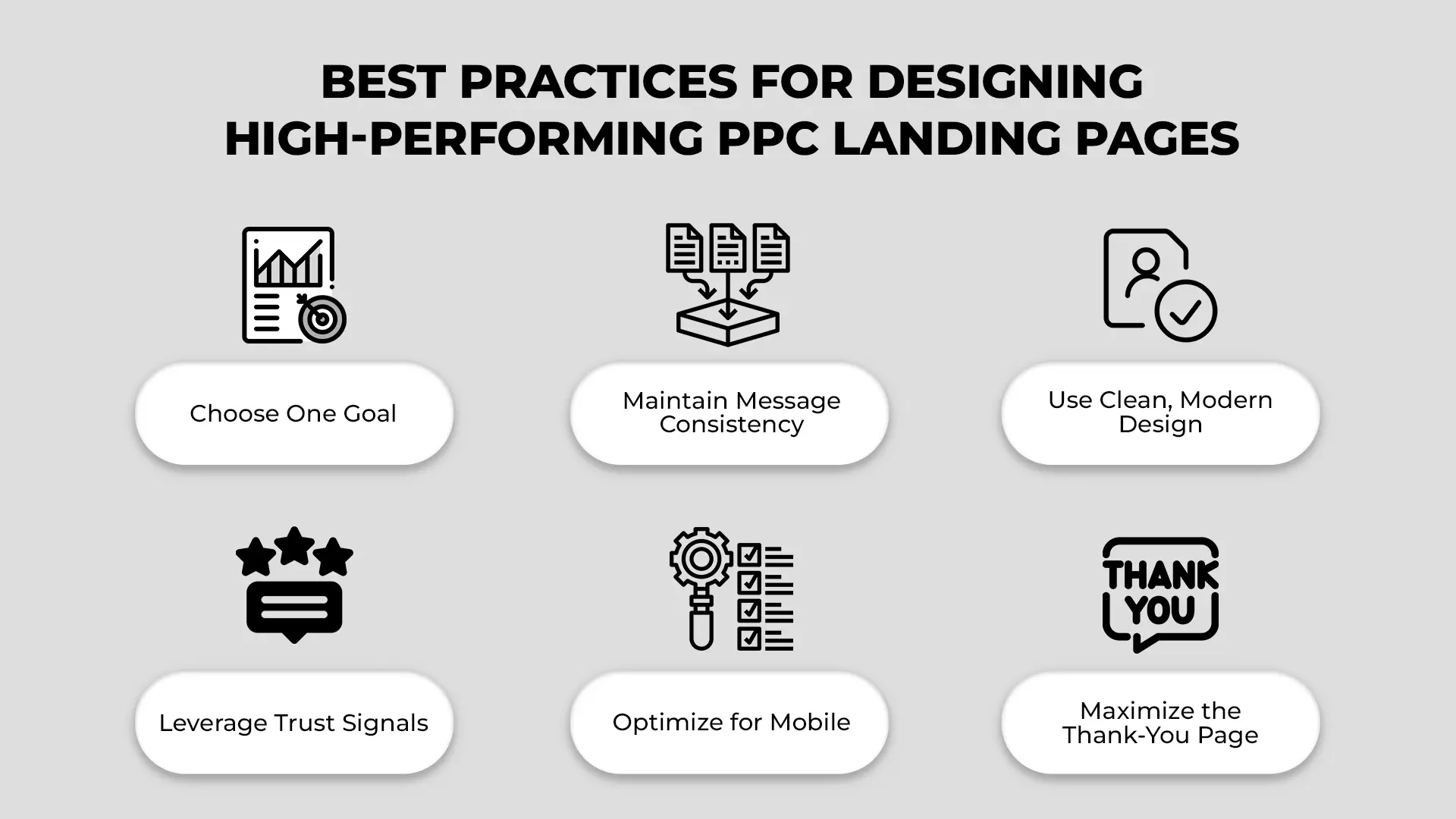
One page = one action. Mixing goals leads to confusion and diluted results.
Maintain Message Consistency
Ensure tight alignment from the ad’s promise to your landing page headline, offer, visuals, and CTA. This also helps maintain consistency in reporting, especially when following frameworks similar to marketing analytics trends.
Use Clean, Modern Design
Simple layouts convert better. Use whitespace, clear typography, visible CTAs, and mobile-first layouts. More than 90% of PPC traffic in some industries comes from mobile devices.
Leverage Trust Signals
Case studies, logos, review snippets, and data points strengthen credibility. Even small trust elements can swing conversion rates by double-digit percentages.
Optimize for Mobile
Fast loading times, visible CTAs, short forms, and tappable elements vastly improve conversion rates for mobile-influenced PPC journeys.
Maximize the Thank-You Page
This page is often overlooked, but it can upsell, direct users to next steps, or segment intent. High-performing funnels treat the thank-you page as a strategic asset, not an afterthought.
5. Real-World Landing Page Examples
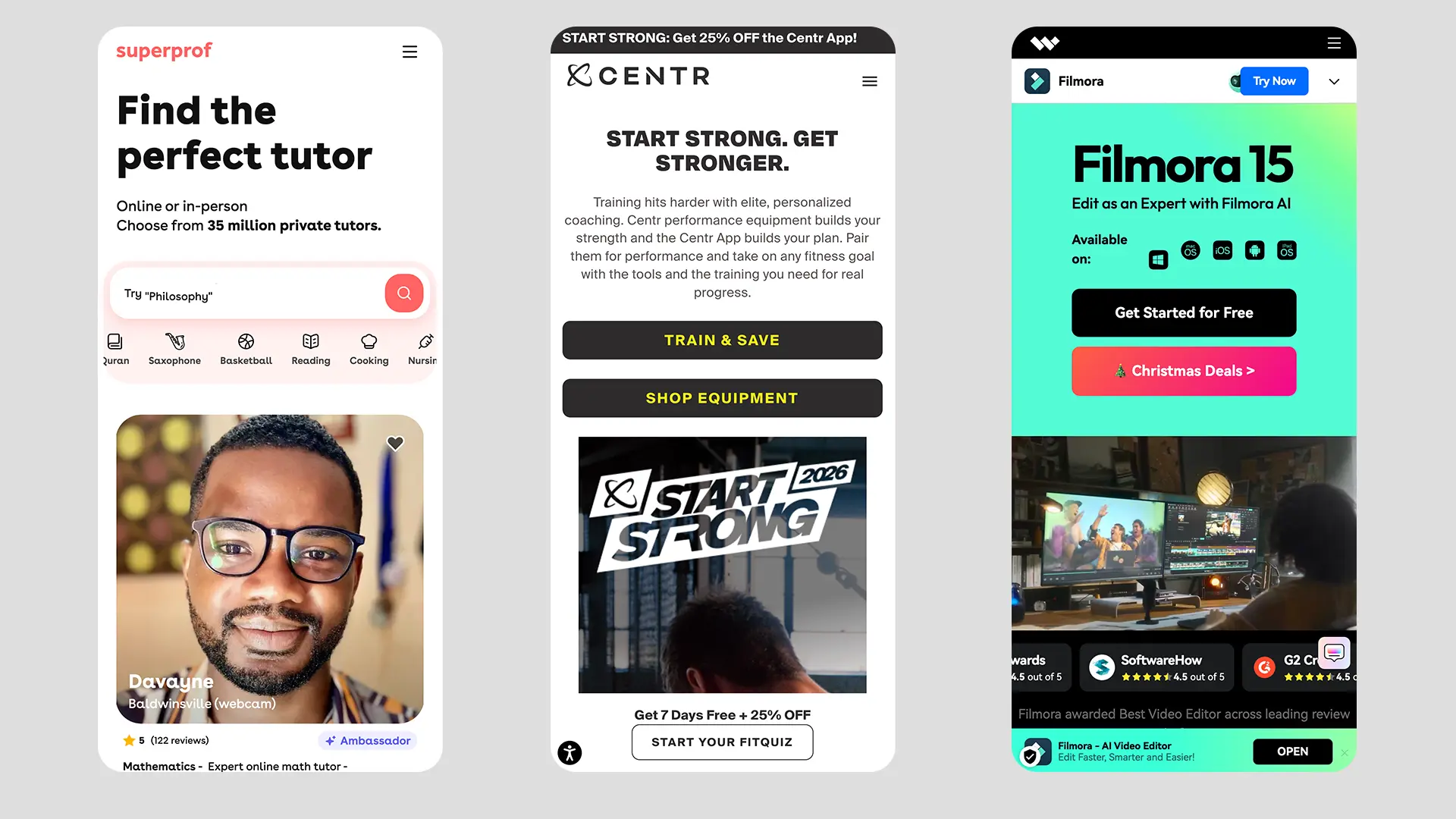
Brands across industries have optimized their PPC flows by focusing on message match and friction reduction:
- A financial services provider increased conversions after aligning ad promises with landing page copy and restructuring visual hierarchy.
- A digital advertising platform improved its trial sign-up rates using bold, benefit-driven headlines and streamlined CTAs.
- A mobility brand simplified its landing page to a single action and significantly reduced bounce rates.
Across these examples, the consistent pattern is clarity, alignment, and low friction — supported by clean measurement methods that avoid common attribution mistakes in GA4.
6. Key Takeaways: PPC Landing Page Checklist
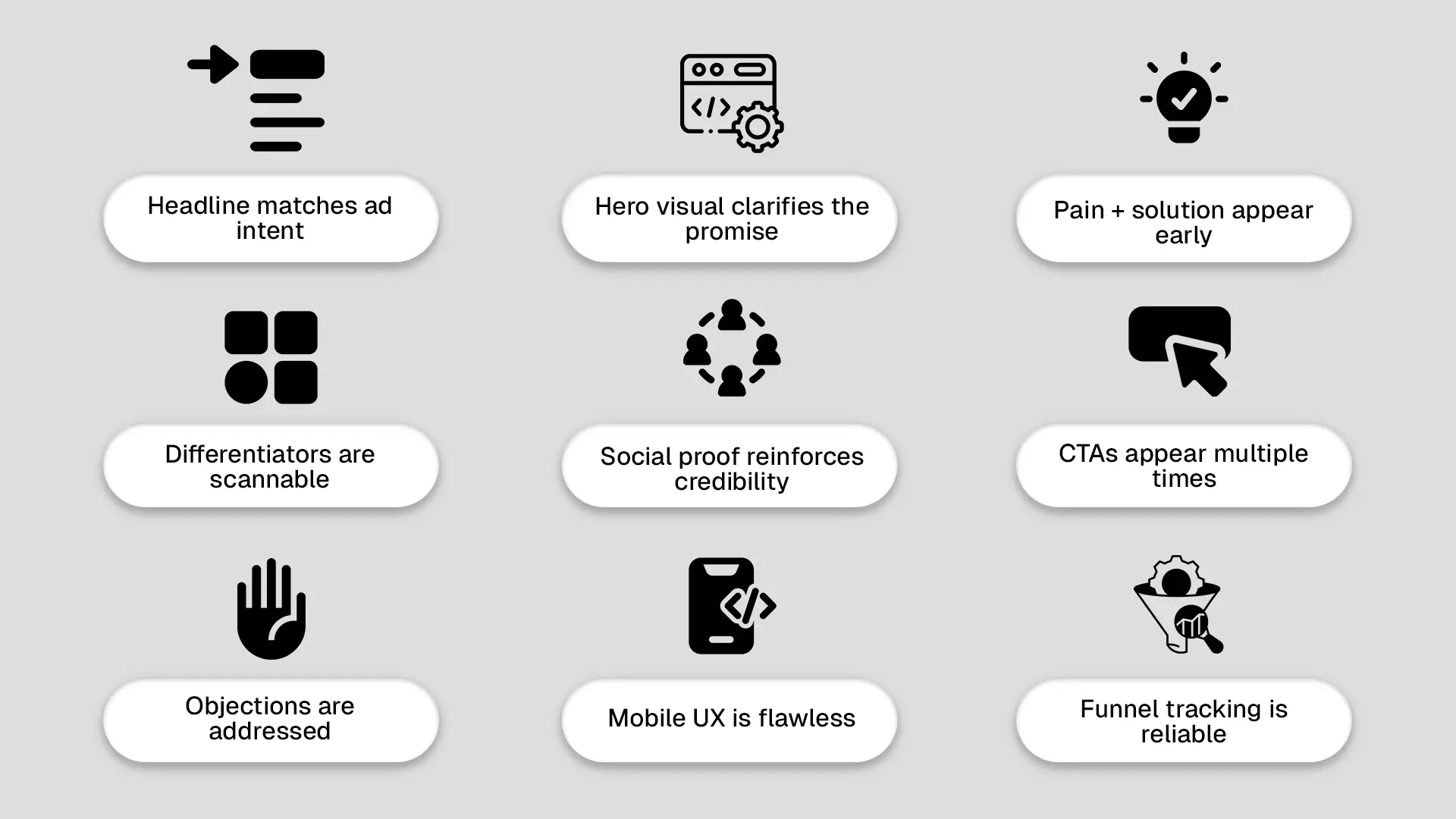
Before launching your next campaign, ensure that:
- Headline matches ad intent
- Hero visual clarifies the promise
- Pain + solution appear early
- Differentiators are scannable
- Social proof reinforces credibility
- CTAs appear multiple times
- Objections are addressed
- Mobile UX is flawless
- Funnel tracking is reliable
When all elements align, PPC campaigns stop being cost centers and start becoming predictable, scalable revenue engines.
Conclusion
Attribution analysis becomes far more meaningful when it goes beyond surface-level interactions and connects every touchpoint to real business outcomes. Bringing together cross-sectional snapshots, long-term trends, factorial experiments, and ROI modelling creates a decision framework that helps marketers understand not just what happened, but why it happened — and what to do next.
When all of this operates inside a unified analytics environment where every interaction is tied back to profit, margin, and its role in the customer journey, the insights become dramatically sharper. That’s the structure we rely on in ObserviX: instead of simply showing activity, the platform reveals how each content cluster, campaign, and channel contributes to financial performance, even across complex multi-touch paths.
In the end, attribution shifts from a reporting function to a strategic foundation. With all data aligned, models validated, and impact measured through actual business results, marketing teams gain something they rarely have — clarity, confidence, and a precise understanding of where to invest to scale growth.