

First-Party Tracking That Survives Everything Browsers Throw at It.
A lightweight JavaScript pixel that runs on your domain, captures sessions third-party pixels miss, and feeds clean conversion data into attribution models you can trust. First-party cookies. Cross-session identity. Sub-50ms load.
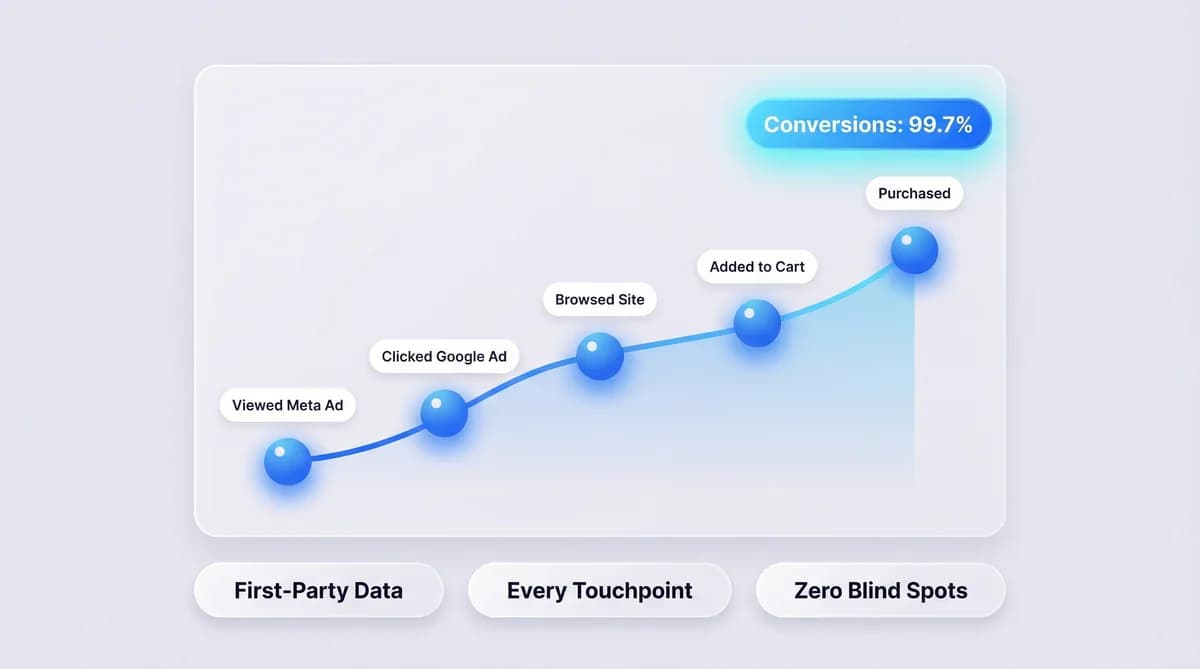
The tracking layer your attribution stack depends on
First-party cookie persistence across sessions on your domain
Average increase in tracked conversions vs. third-party pixels alone
Asynchronous loading with zero measurable impact on Core Web Vitals
Standard platforms — Shopify, WooCommerce, WordPress, Next.js

First-party tracking that works where third-party pixels break
Browser restrictions, ad blockers, and iOS privacy updates have degraded the tracking most performance teams rely on. Meta, Google, and TikTok pixels lose more conversions each quarter as Safari ITP shortens cookie lifespans, Firefox ETP blocks cross-site tracking, and ad blockers strip third-party scripts entirely. The ObserviX Pixel runs on your domain as a first-party script. It sets first-party cookies that persist across sessions, captures conversion events that third-party pixels can no longer see, and feeds that data into attribution models and journey maps. One script. Complete session data. First-party by architecture, not by workaround.
From install to conversion data in three steps
Add one script tag
Copy the ObserviX Pixel snippet into your site header. The script registers as a first-party resource on your domain, sets a first-party cookie, and begins capturing visitors, sessions, and page views immediately. One-click install for Shopify and WooCommerce. Manual snippet for WordPress, Next.js, and custom platforms. No developer required for standard installs.
Map your conversion events
Use the visual Event Manager to define the actions that matter: form submissions, purchases, sign-ups, add-to-carts. Point and click — no code. Every event is tracked with full session context: UTM parameters, referral source, landing page, and timestamp are captured automatically.
See clean, connected data
Your dashboard populates within hours. Every visitor session, every touchpoint, every conversion — tied together by first-party identity. The pixel feeds directly into ObserviX attribution models, customer journey maps, and campaign analytics. One data source for your entire measurement stack.
Higher-quality input data. Higher-confidence output decisions.
The ObserviX Pixel is the data collection layer for every analytical surface in the platform. Attribution accuracy, journey completeness, and audience precision all depend on the quality of the tracking data feeding them.
Multi-Touch Attribution
Conversion credit distributed across touchpoints using complete session history, not partial platform data.
Customer Journey Mapping
Full event timeline from first session to conversion, connected across visits by first-party identity.
Campaign Analytics
ROAS and campaign performance calculated from pixel-captured conversions, not platform-reported estimates that double-count.
Visitor Intelligence
Session-level data with UTM parameters, referral sources, device fingerprint, and behavioral signals.
Event Tracking
No-code event mapping for conversions, micro-conversions, and custom actions via the visual Event Manager.
Audience Segmentation
Segments built on behavioral data, acquisition source, journey stage, and conversion patterns.

Cross-session identity resolution on your domain
Your customers browse on their phone, research on their laptop, and convert on their tablet. Third-party pixels see three anonymous visitors. The ObserviX Pixel uses first-party cookies set on your domain to maintain a persistent visitor identifier across sessions on the same browser. When a visitor authenticates (logs in, submits a form, completes a purchase), the pixel links sessions across browsers and devices to a single identity. The result: connected journey data instead of fragmented sessions. Important distinction — cross-device resolution requires an authenticated event. Unauthenticated sessions on separate devices remain separate until a login or form submission ties them together. This is deterministic matching, not probabilistic fingerprinting.

Built for the current privacy landscape — and what comes next.
The pixel operates as a first-party script on your domain using first-party cookies. This architecture is unaffected by the browser restrictions that degrade third-party tracking: Safari ITP, Firefox ETP, iOS App Tracking Transparency, and most ad blockers that target third-party scripts. First-party cookies set on your domain have longer persistence than third-party cookies, which major browsers now cap at 7 days or block entirely. The pixel is designed for compliance with GDPR, CCPA, and other privacy regulations. It collects no personally identifiable information by default and integrates with consent management platforms for jurisdictions that require explicit opt-in. As browser privacy policies continue tightening, first-party architecture remains the most resilient tracking approach available.
"We ran the ObserviX Pixel alongside our existing Meta and Google tracking for two weeks. The pixel captured 28% more conversions than our platform pixels were reporting — sessions that ad blockers and iOS privacy changes had been hiding. Our attribution data went from estimated to verified. That delta alone justified the switch."

Daniel Park
Performance Marketing Lead, E-Commerce Brand
Pixel — technical questions answered
A lightweight JavaScript snippet added to your site header. It registers as a first-party script on your domain, sets a first-party cookie for visitor identification, and captures sessions, page views, UTM parameters, referral sources, and conversion events. Because it runs first-party, it avoids the browser restrictions and ad blockers that degrade third-party pixels from Meta, Google, and TikTok.
Platform pixels operate in their own ecosystems with their own attribution windows. They double-count conversions when a user interacts with multiple platforms, and they miss sessions blocked by Safari ITP, Firefox ETP, iOS ATT, and ad blockers. The ObserviX Pixel provides independent, first-party measurement across all channels — one conversion count instead of inflated platform numbers.
By capturing complete session history: every UTM parameter, referral source, page view, and conversion event with timestamps. This full-fidelity dataset feeds into ObserviX attribution models (First-Touch, Last-Touch, Linear, Time-Decay, Position-Based, and AI-Driven) to distribute credit across touchpoints based on actual visitor behavior rather than incomplete platform data.
The pixel sets a first-party cookie that persists across sessions on the same browser. Cross-device identity resolution requires a deterministic match — when a visitor authenticates (login, form submission, purchase) on multiple devices, the pixel links those sessions to a single visitor profile. Unauthenticated sessions on separate devices are not merged. This is deterministic matching, not probabilistic fingerprinting.
Yes. One-click installation for Shopify and WooCommerce. For WordPress, Next.js, and custom platforms, add the snippet to your site header. Setup takes under 5 minutes. No developer required for standard installs.
The pixel is designed for privacy compliance. It uses first-party cookies only, collects no personally identifiable information by default, and integrates with consent management platforms. For jurisdictions requiring explicit consent for any cookie (including first-party), the pixel respects CMP signals and fires only after opt-in. We recommend confirming implementation details with your legal team based on your specific jurisdiction.
No. The script loads asynchronously in under 50ms. It has zero measurable impact on page load time or Core Web Vitals. It is lighter than most analytics and tag management scripts.
They serve different purposes and can run together. Web Analytics cookieless mode captures aggregate traffic data without setting any cookies — no consent required under most privacy frameworks. The Pixel sets a first-party cookie to maintain visitor identity across sessions, enabling attribution, journey mapping, and cross-device resolution. Teams that need both aggregate analytics and individual visitor tracking run both.
Stop guessing. Start knowing. Take control of your marketing today.
Start your 14-day free trial and make data-driven decisions